The best corporate retreat team building activities do not feel like forced team building.
Nobody wants to travel to the mountains just to sit in a hotel conference room doing the same icebreakers they could have done back at the office.
A mountain retreat gives you something better: a chance to get people out of their normal routines, put them in a completely different environment, and create experiences where conversation and teamwork happen more naturally.
The key is choosing activities with an actual purpose.
Some should get people moving. Others should create conversation. A few should challenge the group. And not every activity needs to be competitive.
If you are planning a corporate retreat in the Smoky Mountains, here are 12 corporate retreat team building activities that actually work.
1. Take a Team Hike With a Shared Goal
A hike is one of the simplest mountain team-building activities—and one of the easiest to get wrong.
Do not just tell everyone to meet at a trailhead and start walking.
Give the hike a shared purpose.
That could mean reaching a waterfall together, completing a scenic trail as a group, pairing employees who normally do not work together, or stopping at designated points for short team conversations.
The trail naturally removes some of the hierarchy that exists in an office. Everyone is walking the same path, dealing with the same terrain, and sharing the same experience.
For teams staying in Townsend, there are hiking options ranging from shorter scenic trails to longer Smoky Mountain outings.
See the best hiking trails near Townsend when planning your retreat itinerary.
Best for: Connection, informal conversations, smaller teams, and leadership groups
2. Create a Cades Cove Team Challenge
Instead of simply driving Cades Cove together, turn the experience into a team challenge.
Divide the group into small teams and give each one a list of things to find, photograph, or answer along the route.
Examples could include:
- Find three historic structures
- Photograph a specific mountain view
- Identify different types of wildlife
- Find the oldest cabin
- Learn one fact about the early Cades Cove community
- Take the best team photo of the trip
- Find the grist mill
- Identify something every person on the team had never noticed before
This gives employees a reason to interact without forcing awkward conversation.
And because Cades Cove is an experience rather than a conference exercise, people tend to remember it.
Use the complete Cades Cove Loop Road guide to build your route before the retreat.
Best for: Larger teams, cross-department interaction, new teams, and groups with mixed physical abilities
3. Go Horseback Riding Together
Putting everyone on horseback changes the energy of a retreat almost immediately.
For many employees, it will be something they do not normally get to do.
That matters.
Shared first-time experiences are useful for corporate retreat team building because people are learning something at the same time. Titles and departments matter a lot less when everyone is figuring out how to ride a horse.
Townsend has guided horseback riding options nearby, including Davy Crockett Riding Stables and Cades Cove Riding Stables.
Guided rides can work well because the activity is structured without requiring the company to create the structure itself.
See our guide to horseback riding near Townsend when comparing options.
Best for: Memorable retreat experiences, small-to-medium groups, and teams wanting something completely different from office life
4. Host a Pickleball Tournament
Not every team-building activity needs to involve leaving the resort.
A pickleball tournament gives you competition without requiring employees to be serious athletes.
Mix departments when creating teams rather than letting people automatically partner with coworkers they already know.
You can make it as organized or casual as the group wants.
Try:
- Random doubles teams
- Department-versus-department matches
- Leadership-versus-staff games
- Rotating partners after every match
- A championship bracket
- Ridiculous team names and prizes
The goal is not figuring out who the best pickleball player in accounting is.
The goal is getting people laughing, moving, and interacting with coworkers they may barely know.
Tremont Lodge has pickleball among its on-property resort amenities, making this particularly easy to add between meetings.
Best for: Friendly competition, mixed departments, afternoon downtime, and larger groups
5. Try a Fly-Fishing Experience on the Little River
Corporate retreats often become over-scheduled.
A fly-fishing experience does the opposite.
It forces everyone to slow down.
A guided introduction to fly fishing gives participants something to learn while creating plenty of quiet space for one-on-one conversation.
That makes it particularly interesting for leadership teams, executive retreats, sales groups, and smaller departments where the goal is deeper relationship building rather than high-energy entertainment.
It is also one of those experiences that feels uniquely connected to being in the Smoky Mountains.
Even if nobody catches anything, that is not really the point.
Best for: Executive teams, leadership retreats, small groups, mentoring, and relationship building
6. Build a Mountain Scavenger Hunt
A good scavenger hunt combines problem solving, movement, creativity, and competition without making anyone feel like they are participating in a corporate training exercise.
Build teams intentionally.
Avoid putting entire departments together.
Then create challenges around the resort or Townsend.
For example:
Find:
A particular landmark or location.
Solve:
A clue that takes the group to its next stop.
Create:
A 30-second team video.
Photograph:
Something representing one of your company’s values.
Interview:
A teammate and learn something nobody else knows.
Complete:
A simple physical or problem-solving challenge.
Give everyone a fixed finish time and bring the teams back together afterward.
You will usually get more energy from this than another 90-minute conference-room exercise.
Best for: Communication, problem solving, cross-department connection, and competitive teams
7. Run an Outdoor Strategy Session
Not every meaningful team-building activity has to be a game.
Move one of your most important discussions outside.
Break leadership or departments into small groups and give each one a real question facing the company.
For example:
What should we stop doing next year?
What is one problem our customers experience that nobody owns internally?
What could make working here dramatically better?
Where are we wasting the most time?
What would we do differently if we were building this company today?
Give each group 30–45 minutes away from the normal meeting setup, then bring everyone back together to present what they discussed.
Changing the environment can change the conversation.
Best for: Strategy retreats, leadership groups, annual planning, and companies dealing with change
8. Take a Team Tubing Trip on the Little River
If the retreat happens during warmer months, tubing the Little River is one of the easiest ways to give the group an afternoon that genuinely feels like a retreat.
There is very little corporate structure required.
That is part of why it works.
After spending the morning in meetings, employees can get outside, float the river together, talk, laugh, and decompress.
You can still create some structure around it by assigning mixed groups for transportation or lunch beforehand, but avoid trying to turn every minute into an exercise.
Sometimes team building is simply giving people enough space to enjoy being around each other.
Best for: Summer retreats, company celebrations, larger groups, and post-meeting downtime
9. Hold a Campfire Story Session
This one sounds simple because it is.
That is exactly why it works.
After dinner, bring everyone together around a fire and give the conversation just enough structure to get started.
Instead of generic icebreakers, use questions people might actually want to answer:
What job taught you the most before you joined this company?
What is something you are proud of that your coworkers probably do not know?
What was your first impression of this company?
What is the funniest thing that has happened at work this year?
Who helped you most in your career?
Keep participation voluntary and the atmosphere informal.
A campfire removes laptops, presentation decks, conference tables, and most of the things that remind people they are at work.
That creates room for a completely different kind of conversation.
Best for: Culture building, leadership retreats, new teams, and smaller groups
10. Create a Team Photography Challenge
You already have the mountains. Use them.
Split participants into groups and give each one the same photography challenge.
Categories might include:
- Best mountain photo
- Best team photo
- Funniest photo
- Best wildlife photo taken safely from a distance
- Best representation of the company’s culture
- Most creative photo
- Best photo involving everyone on the team
Set a deadline and show the finalists during dinner.
Then let the entire company vote.
This requires virtually no special equipment because everyone already has a phone, yet it encourages exploration, creativity, communication, and friendly competition.
It also leaves the company with photos from the retreat that employees may actually want to keep.
Best for: Creative teams, large groups, mixed physical abilities, and low-cost team building
11. Run a Build-the-Business Challenge
Take advantage of having everyone away from normal responsibilities.
Create small cross-functional teams and give them a hypothetical business problem.
For example:
You have $25,000 and 90 days to launch a new revenue stream for the company. What do you build?
Or:
Design one change that would improve the customer experience dramatically without adding staff.
Or:
If your biggest competitor disappeared tomorrow, what opportunity would you pursue first?
Give teams an hour to develop their idea and five minutes to pitch it.
Leadership can judge based on creativity, practicality, customer impact, and presentation.
Unlike a generic team-building game, the conversation may actually generate ideas the company can use.
Best for: Innovation, cross-functional communication, problem solving, and strategic retreats
12. End With a Team Dinner and Recognition Night
One of the most important parts of a corporate retreat happens after the activities are finished.
Bring everyone together.
Have dinner.
Recognize people.
Talk about what happened during the retreat.
And do not turn the entire evening into another presentation.
Recognition can be serious:
- Major accomplishments
- Years of service
- Leadership
- Customer impact
- Team performance
It can also be fun:
- Best Cades Cove wildlife spotter
- Pickleball champion
- Best retreat photo
- Most unexpected horseback rider
- Scavenger hunt winners
The shared experiences from the previous day or two give everyone something new to talk about.
That is what makes the final night feel different from an ordinary company dinner.
Best for: Every corporate retreat
What Makes Corporate Retreat Team Building Actually Work?
The activity itself is only half of it.
You can take employees to one of the most beautiful places in the country and still create a terrible retreat if every minute feels forced.
The strongest corporate retreat team building plans usually mix four things:
Something Productive
Strategy sessions, planning, presentations, or problem solving.
Something Challenging
A hike, team competition, scavenger hunt, or business challenge.
Something Social
Meals, campfires, drinks, or unstructured downtime.
Something Memorable
Horseback riding, fishing, Cades Cove, tubing, hiking, or another experience people would probably not have together at home.
You do not need twelve activities.
For most retreats, choosing three or four of the right activities is much better than filling every hour of the schedule.
Sample 2-Day Corporate Retreat Team Building Schedule
Here is one way to structure a Smoky Mountain corporate retreat without exhausting everyone.
Day 1
9:00 AM – Arrival & Breakfast
Give people time to arrive, settle in, and catch up.
10:00 AM – Company Strategy Session
Handle the most important business conversation while everyone is fresh.
12:00 PM – Lunch
Keep it relaxed.
1:30 PM – Team Challenge
Choose hiking, Cades Cove, horseback riding, or the mountain scavenger hunt.
5:00 PM – Downtime
Let everyone return to their rooms, use resort amenities, or simply relax.
7:00 PM – Group Dinner
Do not schedule another meeting afterward.
9:00 PM – Campfire
Optional conversation and social time.
Day 2
8:00 AM – Breakfast
9:00 AM – Breakout Sessions
Small groups tackle specific company priorities.
11:00 AM – Build-the-Business Challenge
Cross-functional teams create and pitch ideas.
12:30 PM – Lunch
2:00 PM – Pickleball, Fly Fishing, Tubing, or Free Time
Let people choose from a few options when possible.
6:30 PM – Closing Dinner & Recognition
Celebrate the team and wrap up the retreat.
Why Mountain Corporate Retreats Work Differently
A retreat is supposed to remove people from their normal environment.
That is hard to accomplish when everyone flies to another city, walks into another hotel ballroom, sits under fluorescent lights, and opens the same laptop they use every day.
The mountains immediately feel different.
People go outside.
They walk together.
They experience something unfamiliar.
Conversations happen in places where nobody has a desk.
If you are still deciding between the two, read our guide to why corporate retreats work better in the Smoky Mountains than in the city.
Why Host a Corporate Retreat at Tremont Lodge & Resort?
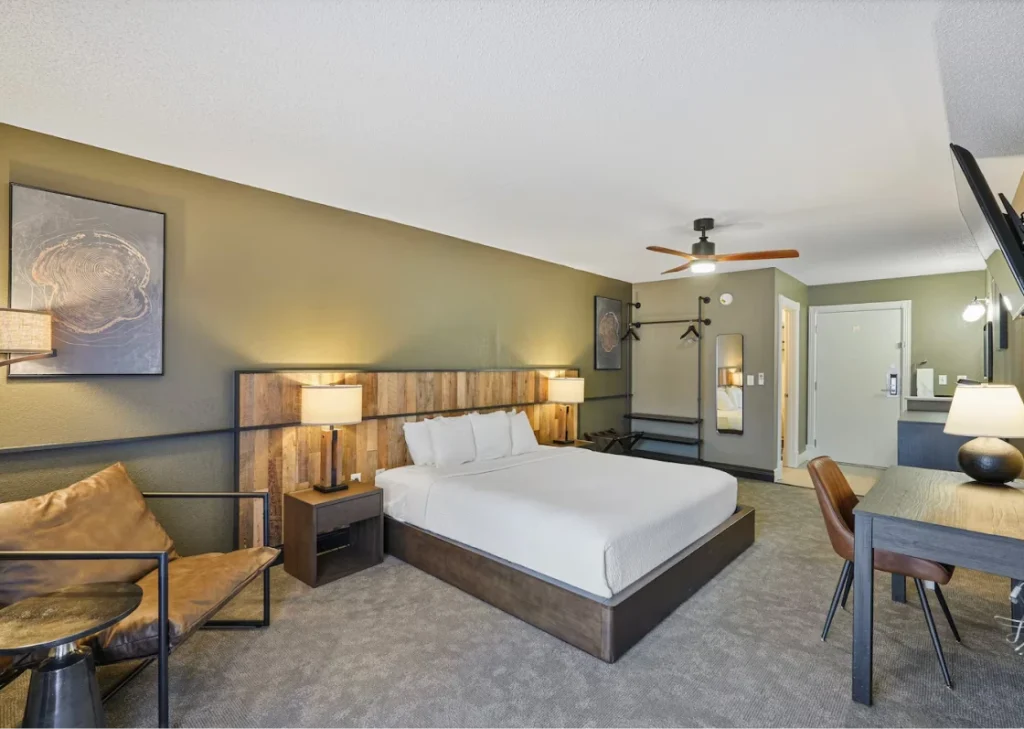
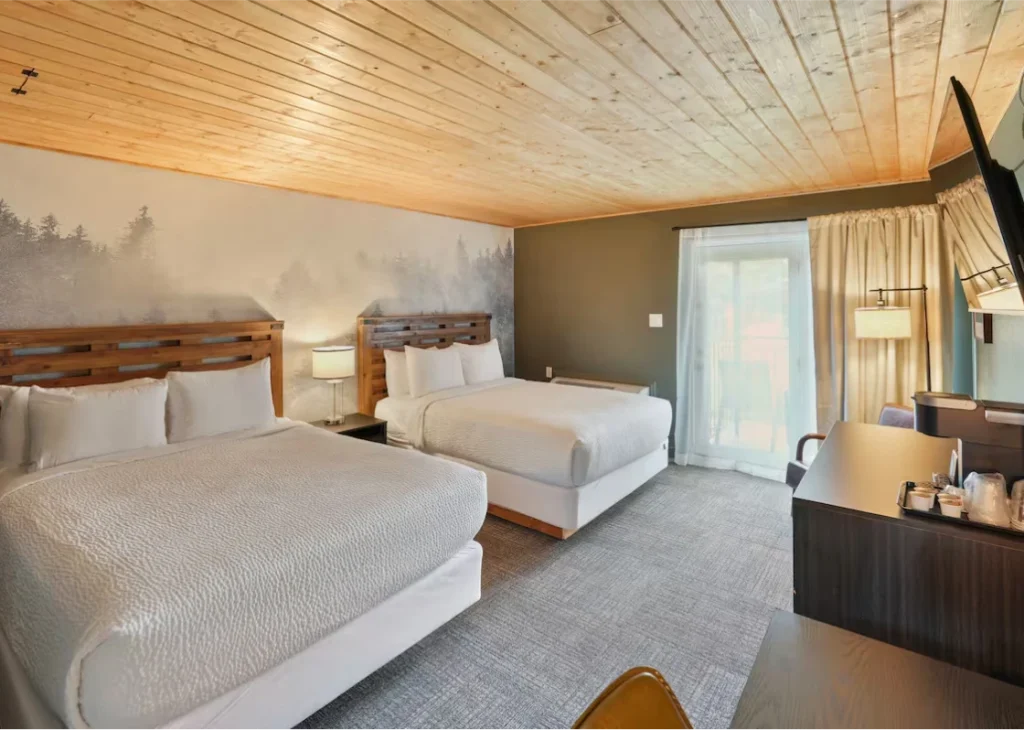
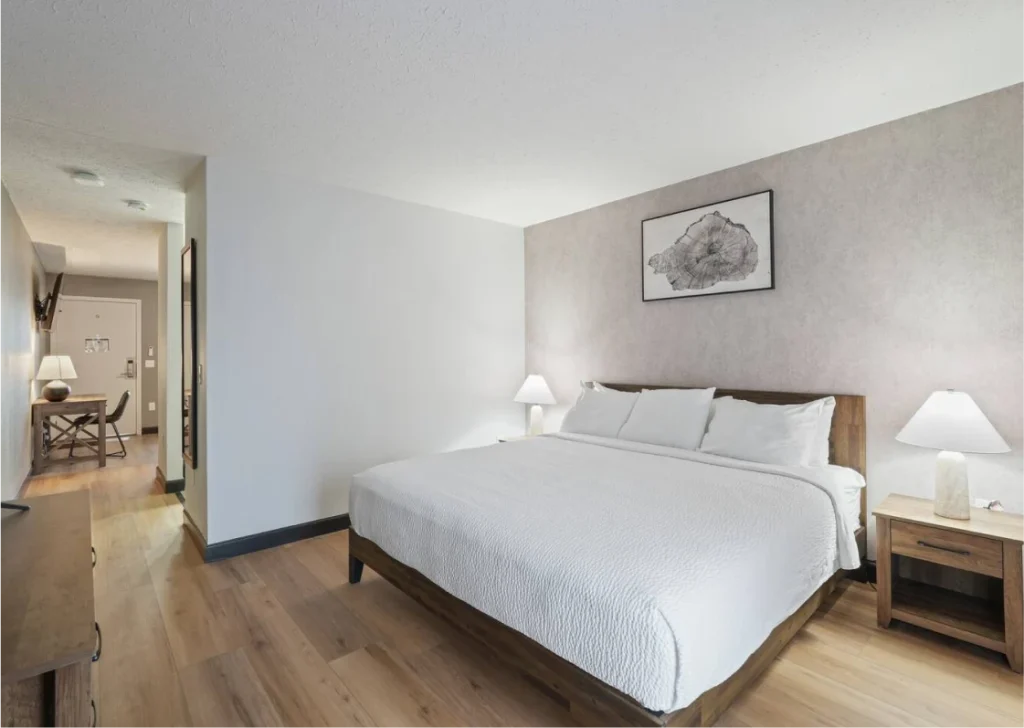
Tremont Lodge & Resort in Townsend, Tennessee gives companies the ability to combine meeting space, team building, lodging, dining, outdoor experiences, and downtime in one Smoky Mountain retreat.
Tremont Events offers flexible indoor and outdoor spaces that can accommodate strategy sessions, presentations, breakout groups, meals, and larger company gatherings.
And because lodging is located on the same resort property, teams do not need to spend the retreat coordinating transportation between a conference venue and separate hotels.
Groups can also build their retreat around nearby experiences such as:
- Great Smoky Mountains National Park
- Cades Cove
- Hiking
- Horseback riding
- Fly fishing
- Tubing
- Waterfalls
- Scenic drives
Explore the Tremont corporate and private event venue to learn more about hosting your retreat in Townsend.
Frequently Asked Questions About Corporate Retreat Team Building
What are the best corporate retreat team building activities?
The best activities depend on what you want the retreat to accomplish. Hiking, scavenger hunts, pickleball, strategy sessions, horseback riding, fishing, business challenges, and group dinners can all work well when they are matched to the team and retreat goals.
How many team-building activities should a corporate retreat include?
Usually fewer than you think. For a two-day retreat, three or four intentional team-building experiences combined with business sessions, meals, and free time are often enough. Over-scheduling can make a retreat feel more exhausting than normal work.
What makes a good corporate team-building activity?
A strong activity should create interaction that would not normally happen at work. It may involve collaboration, competition, problem solving, conversation, learning something new, or simply sharing an experience together.
Are outdoor activities good for corporate retreats?
Yes. Hiking, horseback riding, fishing, tubing, outdoor competitions, and scenic experiences can give employees a shared experience while removing many of the formal barriers of an office environment.
What if some employees cannot participate in physical activities?
Do not build the entire retreat around athletic activities. Mix physical options with activities such as Cades Cove sightseeing, photography challenges, strategy sessions, scavenger hunts with accessible components, group meals, and social events.
Where is a good place for a corporate retreat in the Smoky Mountains?
Townsend, Tennessee offers access to Great Smoky Mountains National Park while providing a quieter setting than Gatlinburg or Pigeon Forge. Tremont Lodge & Resort combines on-site accommodations with dedicated event space and nearby outdoor team-building activities.
Can everyone stay on-site for a corporate retreat at Tremont?
Tremont Lodge & Resort offers on-site lodging with up to approximately 130 rooms, allowing corporate groups to keep meetings, lodging, meals, and much of the retreat experience centered around one property.
Plan a Corporate Retreat People Actually Want to Attend
People remember experiences.
They remember hiking to a waterfall together.
They remember the coworker who somehow dominated the pickleball tournament.
They remember seeing a bear across Cades Cove.
They remember someone’s ridiculous scavenger hunt video.
They remember sitting around a fire talking about things that never come up during a Monday morning meeting.
That is what corporate retreat team building should create.
The work still matters.
The strategy still matters.
But getting people into the mountains gives you an opportunity to build the relationships behind that work too.
If you are planning your next company retreat, explore corporate events and retreats at Tremont Lodge & Resort and start building a Smoky Mountain experience your team will actually be excited to attend.